Samburu National Reserve
located in the Rift Valley Province of Kenya, in the southeast portion of Samburu District. The Ewaso Nyiro River, which divides it from the Buffalo Springs National Reserve, forms its southern boundary.
The reserve is around 345 kilometres from Nairobi and has a total size of 165 km².
The Reserve is located in ecological zone V-, which is characterised as semi-arid and dry. Its moisture index ranges from 42 to 57, meaning that evapotranspiration exceeds the amount of moisture that is accessible. The nights are cold and the days are scorching. The average yearly temperature is between 18°C and 30°C, and the average annual precipitation is 354 mm, with November and April seeing the highest amounts. Due to the abundance of lush vegetation along the Ewaso Nyiro River, which serves as the primary water supply for the Reserve and the surrounding towns, a significant concentration of species may be observed in the reserve throughout the dry season, which begins in late May and lasts until early October.
Wildlife
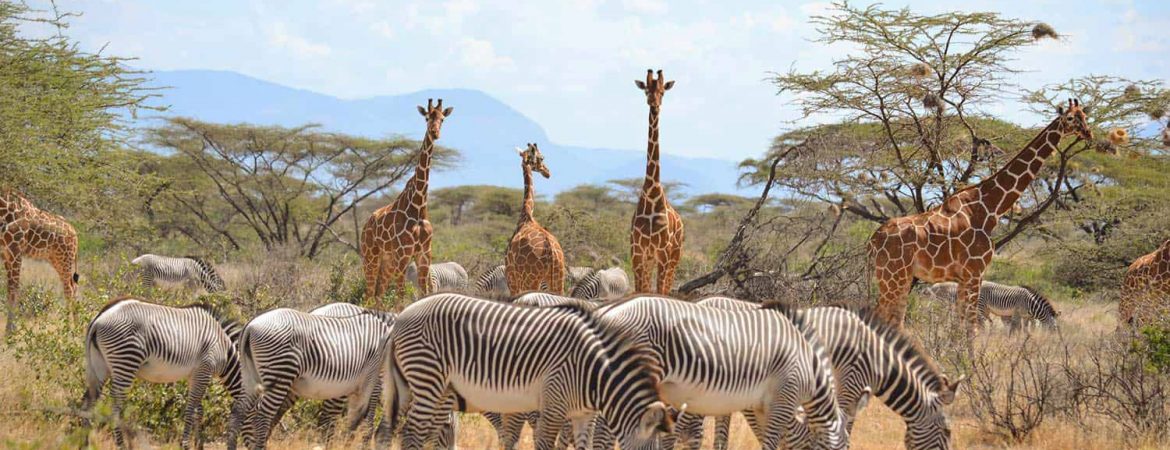
Rare northern specialised species including the Grevy Zebra, Somali Ostrich, Reticulated Giraffe, Gerenuk, and Beisa Oryx (also known as Samburu Special) are abundant in the reserve's biodiversity. The reserve, which has at least 900 elephants, is also well-known. A major draw are large predators like lions, leopards, and cheetahs (Kamunyak the Miracle Lioness, who adapted the infant Oryx, lives in the reserve). Sightings of wild dogs are another frequent draw to this special protected region. With almost 450 species identified, there is a wealth of bird life. Many riverine forest species complement the birds of the drier northern bush land.
Activities
- Nature walks.
- Game drives.
- Bird watching.
| Languages spoken | English, Swahili, Local Languages |
|---|---|
| Currency used | USD | KES |
| Area (km2) | 165 |
| Country name | Kenya |